
You invest in a high-end ergonomic mesh office chair, adjust your gas cylinder until your feet touch the floor, align your lumbar pad against your lower spine, and settle in for deep programming or analytical work. Yet within two hours, an unmistakable, irritating sensation sets in: subtle tingling across your toes, cold feet, or a dull, heavy ache running down the underside of your thighs. When diagnosing lower-limb pain, proper seat pan depth ergonomics is the single most critical factor in preventing nerve pinch and arterial restriction.
Table of Contents
Most developers and remote workers blame poor venous return, tight hamstrings, or unsupportive shoes. In reality, the root cause is almost always mechanical: popliteal artery compression caused by incorrect seat pan depth ergonomics.
When analyzing seat pan depth ergonomics, even a one-inch mismatch between your upper leg length and the chair cushion edge creates a focal pressure zone behind the knee. In this biomechanical analysis, we evaluate the neurovascular anatomy of the popliteal fossa, calculate the BIFMA clearance ratios, and detail the exact adjustments and seating hardware required to restore unrestricted lower-limb blood circulation.
1. The Mechanical Anatomy of the Popliteal Fossa: Arterial & Nerve Compression
The space directly behind the human knee joint is known anatomically as the popliteal fossa. In the context of seat pan depth ergonomics, this shallow, diamond-shaped depression serves as the primary conduit for critical neurovascular structures traveling from the pelvic girdle down to the foot:
- The Popliteal Artery: The deep continuation of the femoral artery, responsible for supplying oxygenated arterial blood to the knee, calf musculature, and dorsal/plantar regions of the foot.
- The Popliteal Vein: The primary deep vein carrying deoxygenated blood back toward the inferior vena cava. Because venous blood pressure is inherently lower than arterial pressure, the popliteal vein is exceptionally susceptible to external compressive collapse.
- The Tibial Nerve: A major terminal branch of the sciatic nerve running centrally through the fossa, providing sensory innervation to the sole of the foot and motor control to calf flexors.
- The Common Fibular (Peroneal) Nerve: Traveling along the lateral boundary of the fossa, governing ankle dorsiflexion and sensory feedback across the upper foot.
The Hydrostatic Pressure Mechanism:
Unlike the muscular buttocks and upper posterior thighs—which are cushioned by the gluteus maximus and dense adipose tissue designed to bear seated loads—the popliteal fossa lacks protective muscular shielding. When a chair cushion presses firmly against the underside of the knee, external mechanical pressure exceeds capillary closing pressure (30 to 32 mmHg). This partial vascular occlusion causes localized ischemia, reduced venous return (venous pooling), and ischemic nerve paresthesia—commonly felt as “pins and needles.”
When seat pan depth is excessive, the user instinctively slides their pelvis forward away from the backrest to relieve pressure behind the knees. This creates a secondary biomechanical failure: lumbar kyphosis (flattening of the natural lumbar curve), transferring excessive compressive shear loads onto the L4–L5 and L5–S1 spinal discs.
2. The 2-to-3 Inch Clearance Rule: Anthropometric Clearance Calculations
To eliminate popliteal pressure through standardized seat pan depth ergonomics, professional ergonomic standards—specifically BIFMA G1-2017 Ergonomics Guideline for Furniture and the ISO 9241-5 standard—mandate specific clearance tolerances between the leading edge of the seat cushion and the back of the leg.
The standard baseline is the anthropometric buttock-popliteal length: the horizontal distance measured from the rearmost point of the buttocks to the posterior surface of the lower leg, measured with the knee bent at a 90° angle.
Optimal seat pan functional depth must always remain less than the user’s buttock-popliteal length with a clearance margin:
Functional Depth <= Buttock-Popliteal Length – 2.0 to 3.0 inches (5.0 to 7.6 cm)
The 3-Finger Practical Diagnostic Test
You do not need specialized calipers to test your personal chair alignment. In practical seat pan depth ergonomics, you can perform this standard clinical check right now:
- Sit upright in your task chair with your sacrum and lumbar spine supported firmly against the backrest.
- Ensure your feet are flat on the floor with your knee joint flexed at approximately 90° to 100°.
- Place your hand vertically against the front edge of the seat pan and attempt to slide three to four fingers into the gap between the front cushion edge and the back of your calf muscle.
- The Diagnostic Result:
- Fewer than 2 fingers (less than 1.5 inches): The seat pan is excessively deep. The cushion edge is impinging directly upon your popliteal neurovascular bundle.
- Between 3 and 4 fingers (2.0 to 3.0 inches): Optimal seat pan depth ergonomics clearance. Arterial flow and tibial nerve signaling are unrestricted while supporting the maximum surface area of your femoral thighs.
- More than 5 fingers (greater than 4.0 inches): The seat pan is too shallow. Body weight concentrates over a narrow ischial footprint, causing localized pelvic fatigue.
To verify that your desk height, keyboard tray, and chair pan coordinate properly with your personal limb measurements, use our free Interactive Ergonomic Desk Height Calculator: https://vortexmomentum.tech/desk-height-calculator/
3. Waterfall Edge Contours vs. Active Sliding Seat Pans
To mitigate lower-limb ischemia, furniture manufacturers deploy two mechanical approaches: contour design and active sliding seat mechanisms.
1. The Passive Approach: The Waterfall Front Edge
A “waterfall” edge curves downward in a smooth, continuous convex arc at the leading edge of the seat pan. By curving downward at an angle of 20° to 35°, the cushion gradually decreases contact pressure against the hamstrings rather than terminating in an abrupt, sharp 90° edge.
While a waterfall contour is an essential baseline, it is a passive accommodation. If a chair’s static seat depth is 20 inches and the user is 5’4″ with a 17.5-inch buttock-popliteal length, even a waterfall edge will compress the popliteal fossa because the structural frame beneath the foam remains too deep.
2. The Active Solution: Independent Sliding Seat Pans
In chairs designed for active seat pan depth ergonomics, the seat cushion mounts onto a multi-position horizontal linear slider track. Using a dedicated lever or cable release, the user can translate the entire seat pan forward or backward independently of the backrest over an adjustment range of 2.0 to 2.5 inches.
This allows petite individuals, average-height operators, and tall engineers to dial in the exact 3-finger clearance window without moving their back away from the lumbar curve.
4. Hardware Recommendations: Solving Seat Pan Depth Ergonomics
When selecting seating infrastructure, optimizing your seat pan depth ergonomics requires hardware that accommodates your exact anthropometric proportions.
Editorial Disclosure: Vortex Momentum is reader-supported. When you purchase through links on our site, we may earn an affiliate commission at no additional cost to you. We only recommend hardware tested against rigorous engineering and biomechanical standards.
Option 1: Benchmark Ergonomic Sliding Pan — Ticova Ergonomic Office Chair
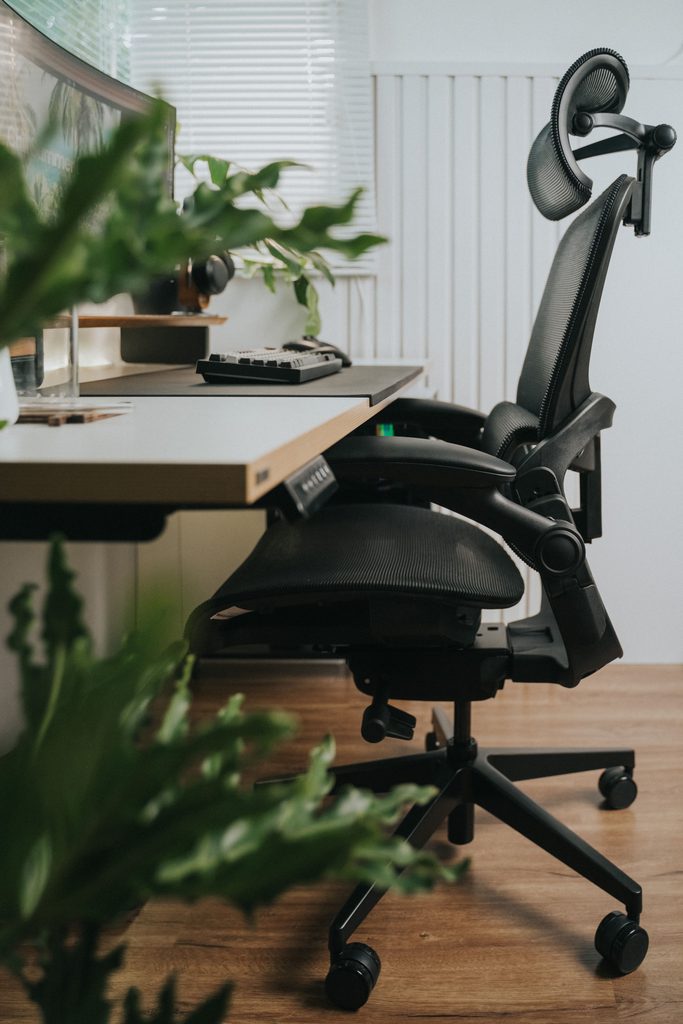
For desk workers experiencing persistent thigh pressure or numbness, the Ticova Ergonomic Chair provides full sliding pan functionality at an accessible price point, delivering the custom popliteal clearance typically reserved for premium commercial task seating.
- Sliding Seat Range: Smooth linear track delivering dedicated seat pan depth ergonomics control with up to 2.4 inches (6 cm) of horizontal depth travel to dial in the 3-finger gap.
- Waterfall Foam Cushion: High-density, high-resilience molded foam with a curved leading edge to eliminate focal pressure under the hamstrings.
- Dynamic Lumbar Integration: Adjustable lumbar depth and height that remains locked against the spinal curve regardless of seat pan position.
- Recline & Tilt Tension: 130° maximum tilt lock to facilitate hip angle opening and pelvic pressure redistribution.
- Weight Capacity: Certified ANSI/BIFMA dynamic loading up to 300 lbs.
View Specifications and Check Pricing on Amazon: https://www.amazon.com/dp/B08P8K28M9?tag=vortexpin-20&linkCode=ll2&linkId=seatpanopt1
Option 2: Active Correction & Elevation — Kensington SmartFit SoleMate Footrest
If your current chair lacks a sliding pan mechanism, retrofitting your workstation with an adjustable angled footrest relieves hamstring compression by elevating the thighs and stabilizing the pelvic base.
- Biomechanic Function: Elevates plantar feet by 3.5 to 5.0 inches, lifting the distal thigh clear of static chair waterfall rims.
- Angled Articulation: Continuous tilt adjustment from 0° to 20° to maintain active ankle flexion and calf pump action.
- Non-Skid Surface: Textured grip platform designed for stability on hard flooring or high-pile carpets.
- Target User: Petite developers dealing with chairs whose fixed seat pans are too deep or sit too high relative to desk clearance.
View Kensington SmartFit Footrest on Amazon: https://www.amazon.com/dp/B00455C09A?tag=vortexpin-20&linkCode=ll2&linkId=seatpanopt2
For workstations that pair ergonomic seating with height-adjustable frames, verify frame stiffness and high-elevation stability using our guide on Standing Desk Crossbar vs T-Frame Stability: https://vortexmomentum.tech/standing-desk-crossbar-vs-t-frame-stability/
5. Seat Pan Depth Ergonomics: 4 Corrective Protocols to Restore Circulation
If you are experiencing acute tingling or leg fatigue while seated, apply these four clinical workstation modifications to restore balanced seat pan depth ergonomics immediately:
- Adjust Seat Pan Slide Backward: To correct your seat pan depth ergonomics, depress the horizontal seat lever and slide the cushion as far back toward the spine support as possible. Ensure at least three full finger widths exist between the cushion perimeter and the crease of your knee.
- Open the Torso-to-Thigh Hip Angle (100° to 110°): Sitting at a rigid 90° hip angle places maximum strain on the psoas and shortens the hamstrings. Recline your chair backrest slightly to 105°. This rotates the pelvis backward and reduces direct downward tissue pressure against the popliteal crease.
- Deploy an Ergonomic Footrest: When static chair frames prevent proper seat pan depth ergonomics, deploy an angled footrest beneath your feet to support your lower limbs. If lowering your chair to clear popliteal pressure drops your elbows below desk level, do not raise the chair back up; keep the chair low to protect your thighs and elevate your feet.
- Engage the Soleus Muscle Calf Pump: The soleus muscle within the calf acts as a secondary heart, pumping venous blood upward against gravity through deep muscular contraction. Perform 15 ankle dorsiflexion rocks (lifting your toes while keeping heels planted) every 45 minutes to stimulate venous return.
Summary & Final Verdict
Lower limb numbness, tingling toes, and calf fatigue are not inevitable consequences of prolonged engineering sessions—they are mechanical symptoms of localized neurovascular occlusion. In the broader scope of seat pan depth ergonomics, preventing popliteal artery compression is essential for sustained circulatory health and lumbar stability.
While waterfall contours provide passive softening, eliminating thigh compression requires maintaining a 2-to-3 inch popliteal clearance gap. Upgrading to a task chair with an active sliding seat pan—such as the Ticova Ergonomic Chair—gives you the mechanical control required to fit your frame precisely. If you are operating on a static chair, pairing an adjustable footrest with an open 105° hip angle ensures blood flow remains unobstructed throughout your workday.