
When configuring an ergonomic workstation, the debate between a dual motor vs single motor standing desk comes down to dynamic load capacity, transit speed, and mechanical stability over extended duty cycles. Selecting a motorized standing desk for a professional setup requires analyzing mechanical load thresholds and crossbar rigidity rather than aesthetic veneers. When mounting dual 27-inch monitors, heavy gas-spring arms, and high-draw PC hardware, the structural differences between single-motor and dual-motor lifting columns determine long-term workspace stability.
Table of Contents
Dynamic Load Capacity vs. Static Weight Ratings
A common point of confusion when evaluating sit-stand frames is the difference between dynamic and static weight limits:
- Dynamic Load Capacity: The total weight the internal motor assembly can safely elevate or lower while in motion.
- Static Load Capacity: The stationary weight the frame, legs, and footplates can support when the motors are idle.Operational ratings comply with standard ANSI/BIFMA performance criteria.
Single-motor frames typically feature a dynamic load ceiling of 150 to 180 lbs (68 to 81 kg). This motor transfers torque to the opposite leg through an exposed hex connecting rod. While sufficient for a single ultrabook For full deflection charts and payload benchmarks, see our standing desk weight capacity guide. and peripheral accessories, adding a heavy dual-arm monitor clamp introduces concentrated lateral strain that forces the drive shaft out of true alignment.
Dual-motor architectures deploy dedicated, synchronized DC brushless motors concealed inside each telescoping column. These units provide dynamic load capacities exceeding 260 to 355 lbs (118 to 161 kg). By distributing torque evenly across both legs, dual-motor desks prevent drive train strain and maintain smooth, synchronized adjustment speeds under unbalanced display loads.
High-Elevation Deflection and Monitor Oscillation
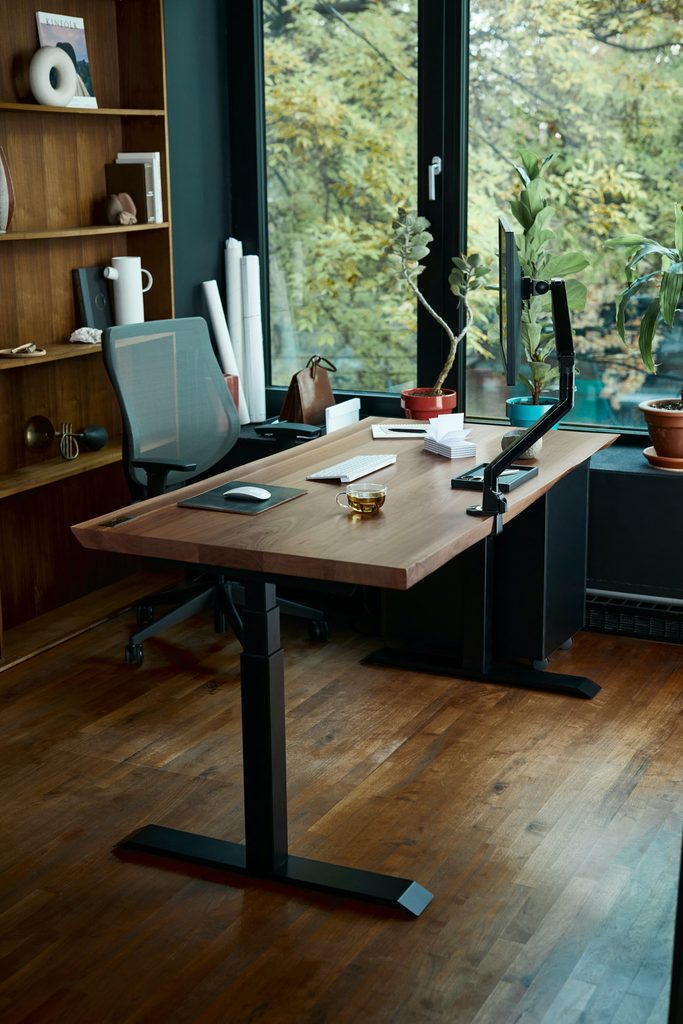
The primary structural flaw in workspace infrastructure is desk wobble—mechanically defined as structural deflection.
When a desk extends to standing heights between 42 and 48 inches (106 to 122 cm), the moment arm created by the telescoping columns multiplies leverage against the floor feet. Single-motor desks typically employ lighter-gauge rolled steel columns with loose tolerance plastic glide pads. At high standing elevations, keystrokes generate lateral harmonic vibrations that travel up the frame, causing multi-monitor arrays to oscillate violently.
Dual-motor commercial frames utilize heavy three-stage inverted steel columns paired with integrated structural crossbars. The increased mass of the independent leg assemblies shifts the desk’s center of gravity downward, significantly reducing harmonic oscillation and preventing eye fatigue during extended standing sessions.
Dual Motor vs Single Motor Standing Desk: Key Mechanical Differences
Drive train durability depends on duty cycle parameters and thermal management:
- Single-Motor Strain: Operating near 80% of dynamic capacity causes single motors to overheat quickly, triggering thermal cut-off switches during successive height adjustments.
- Dual-Motor Distribution: Operating synchronized motors under the same physical load requires each unit to work at roughly 40% capacity, lowering internal heat accumulation and protecting gearbox teeth from premature shearing.
- Anti-Collision Sensitivity: Dual-motor systems utilize independent Hall effect sensors to measure current draw per column, immediately stopping vertical travel if an obstruction (such as an under-desk drawer or cable drag) creates resistance.
Frame Height Check: Do not guess your standing frame stroke. Use our ANSI/BIFMA Desk Height Calculator to determine if your body height and footwear require an extended-range 3-stage frame before purchasing.
Long-Term Duty Cycle & Thermal Overload Protection
Understanding mechanical duty cycles is critical when evaluating a dual motor vs single motor standing desk for daily professional workflows. Standard consumer linear actuators are engineered around a 10% operating duty cycle—typically defined as 2 minutes of continuous vertical adjustment followed by 18 minutes of rest. When heavily loaded single-motor systems exceed this threshold during successive elevation changes, internal friction causes the motor winding temperature to surge rapidly, triggering automatic thermal shut-off switches.
In contrast, a dual motor vs single motor standing desk comparison shows that synchronized dual-motor architectures divide mechanical resistance across two dedicated drive units. Because each column carries only 50% of the aggregate desktop load, current draw remains low and operating temperatures stay well beneath safety limits. This prevents premature gearbox teeth shearing, eliminates jerky stop-start travel, and ensures your height presets adjust smoothly throughout years of heavy sit-stand transitions.
Hardware Recommendation: Heavy-Duty Under-Desk Cable Management Tray
When evaluating a dual motor vs single motor standing desk under full accessory loads, eliminating cable drag and power brick sag is essential to prevent motorized drive strain. This flush-mount steel raceway organizes heavy charging bricks and power distributors cleanly beneath the frame crossbar.
Linear Velocity and Acoustic Performance Under Dynamic Load
Beyond weight ratings, travel speed and acoustic dampening distinguish premium workstation frames. A dual motor vs single motor standing desk comparison demonstrates that synchronized dual actuators deliver consistent travel speeds of 1.3 to 1.5 inches per second under full load, maintaining quiet operation under 48 decibels. Single-motor systems paired with mechanical hex drive rods experience noticeable speed drops under load, frequently slowing below 0.8 inches per second while producing audible gear whine and vibration.Investing in a dual motor vs single motor standing desk with verified dynamic stroke ensures your workspace adapts seamlessly to your biomechanical needs.
Final Engineering Verdict
When deciding between a dual motor vs single motor standing desk, verify your height and load requirements before purchasing.
For single-laptop workflows or low-profile single-screen setups under 40 lbs of dynamic equipment, single-motor frames provide adequate mechanical performance.
However, for multi-monitor developer environments, studio audio gear, or heavy solid wood desktop surfaces, dual-motor configurations are mandatory to ensure long-term structural stability, zero harmonic deflection, and motor reliability.
For routing heavy cables and power bricks without straining your actuators, check out our guide on standing desk cable management and undermount load balancing.
Investing in a dual motor vs single motor standing desk provides the torque redundancy and lifting stability required for heavier dual-monitor setups and solid wood surfaces.